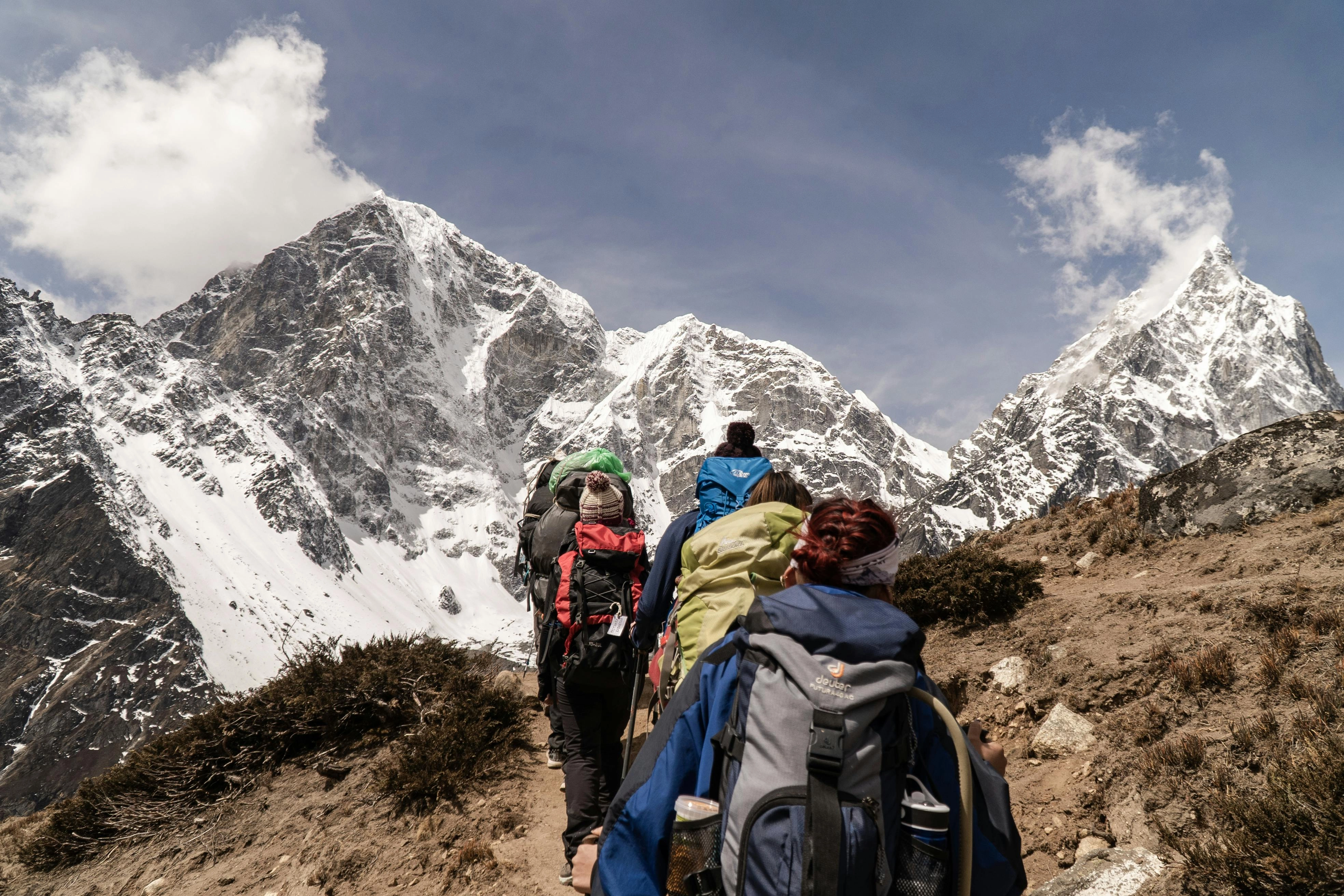
EVEREST BASE CAMP TREK

EVEREST BASE CAMP TREK

Country

Nepal

Level

moderate

Duration

14 Days

Altitude

5,550 M

Group Size

1-20

Best Season

Spring and Autumn

mountain

Highlights

  • Stand at Everest Base Camp (5,364 m) and witness the mighty Khumbu Icefall up close.

  • Scenic mountain flight to Lukla, one of the world’s most thrilling airstrips.

  • Explore the vibrant Namche Bazaar, the gateway to Everest and Sherpa culture.

  • Visit Tengboche Monastery, surrounded by panoramic Himalayan peaks.

  • Experience authentic Sherpa hospitality in remote mountain villages.

  • Hike to Kala Patthar (5,550 m) for the best sunrise view of Mt. Everest.

  • Learn about local Buddhism, prayer flags, and life at high altitude.


Overview

Standing at the foot of the world’s highest mountain is not just a dream; it’s a calling. The Everest Base Camp Trek 2025 with Altinepal Treks invites global adventurers to walk in the footsteps of the Sherpas, through timeless Himalayan villages, prayer-flag-lined trails, and the silent majesty of the Khumbu glaciers.

Your journey begins in Kathmandu, where the rhythm of the city hums with temple bells and mountain stories. After a scenic drive to Ramechhap and a thrilling flight to Lukla, the trek gradually climbs through pine forests and stone-built hamlets where hospitality is measured in warm tea and genuine smiles.

As you follow the Dudh Koshi River toward Namche Bazaar, the gateway to Everest, each step brings both challenge and reward; the tang of thin air, the sight of Ama Dablam gleaming in sunrise gold, and the sense of belonging that only the Himalayas can give. Days of trekking are balanced with acclimatization stops to ensure comfort and safety.

Beyond Namche, trails wind past ancient monasteries and into the heart of Sherpa culture. Tengboche Monastery welcomes you with chants echoing against snow peaks; Dingboche and Lobuche lead you ever closer to the dream. Finally, from Gorak Shep, you stand on the rocky moraine of Everest Base Camp (5,364 m); prayer flags flutter where climbers begin their ascent to the top of the world.

A dawn hike to Kala Patthar (5,550 m), the highest point of this trek, rewards you with a 360° panorama of Everest, Lhotse, Nuptse, and Pumori; the closest and most breathtaking view of these giants. The return journey retraces the path through friendly villages, completing a circle of discovery and humility.

This trek is more than miles walked; it’s a conversation with mountains, a meditation on endurance, and a celebration of Nepal’s living culture. Guided by certified professionals and local experts, you walk safely, ethically, and sustainably; carrying home not just photos, but a deeper connection with the Himalayas.


Itinerary

Welcome to Nepal! Our representative meets you at Tribhuvan International Airport and transfers you to your hotel. After gear checks and briefing at our office, we drive to Ramechhap (approx. 4 hrs) to prepare for the early morning flight to Lukla.

A short, scenic mountain flight to Lukla launches the adventure. Meet the trekking crew and descend gradually through pine forest and small Sherpa settlements to Phakding beside the Dudh Koshi River.
Walking time: 3-4 hours.

Cross suspension bridges draped in prayer flags and enter Sagarmatha National Park. A steep final climb leads to vibrant Namche Bazaar, the cultural and commercial hub of the Khumbu.
Walking time: 5-6 hours.

A vital rest day to adapt to altitude. Optional hike to Everest View Hotel or Khumjung Village for superb mountain vistas and cultural insight. Explore the local museum and enjoy coffee overlooking the peaks.

Trail contours along ridges with stunning views of Ama Dablam, Lhotse, and Everest. Reach Tengboche Monastery; the spiritual heart of the Khumbu; where monks chant as clouds drift past the golden Buddha.
Walking time: 5 hours.

Descend through rhododendron forests, cross the Imja River, and climb steadily to Pangboche and onward to the broad valley of Dingboche, surrounded by farmland and stone walls.
Walking time: 6 hours.

A gentle hike to Nangkartsang Peak offers breathtaking views of Makalu and Island Peak. Rest in the afternoon and prepare for higher altitudes.

The trail ascends through alpine meadows to Thukla Pass, marked by memorials to climbers. Continue across glacial moraine to Lobuche beneath Nuptse’s dark face.
Walking time: 5 hours.

Follow the moraine of the Khumbu Glacier to reach Everest Base Camp; the legendary staging ground of Everest expeditions. After celebrating and taking photos, return to Gorak Shep and rest overnight.
Walking time: 7-8 hours.

Climb early to Kala Patthar for a golden sunrise over Everest. The panorama is unforgettable. Descend through Thukla to the valley of Pheriche.
Walking time: 6-7 hours.

Retrace the trail via Pangboche and Tengboche, descending into warmer air and lively villages. Celebrate with local food and hot showers in Namche.
Walking time: 6 hours.

A long but cheerful descent through forested paths back to Lukla; time to thank your porters and guides for their incredible support.
Walking time: 7 hours.

Morning flight from Lukla. Return drive to Kathmandu and transfer to a hotel. Evening farewell dinner with a cultural show.

Transfer to the airport or continue your journey with another trek or cultural tour in Nepal.

Includes

Domestic flights (Ramechhap ↔ Lukla)
Airport transfers in Kathmandu and Ramechhap
All ground transportation as per itinerary
Licensed English-speaking Trekking Guide and porter service
Twin-sharing accommodation in teahouses during trek
Breakfast, lunch, and dinner while trekking
Sagarmatha National Park entry and local permits
Sun Hat and Company duffel-bag 
First-aid kit and oxygen cylinder for emergencies
Government taxes and service charges

Excludes

International flights to/from Nepal
Nepal visa fees and travel insurance
Meals in Kathmandu other than breakfast
Personal trekking gear (can be rented)
Alcoholic or bottled drinks, snacks, and hot showers beyond package
Tips for guides and porters (customary but voluntary)

Notes

note
Best Season: March - May (spring) and September - November (autumn) offer clear skies and stable weather.
note
Trek Difficulty: Challenging; suitable for fit trekkers with prior hiking experience.
note
Altitude Safety: We follow a “climb high, sleep low” principle and include two acclimatization days.
note
Accommodation: Local teahouses with basic amenities; warm sleeping bags provided.
note
Connectivity: Limited Wi-Fi and charging available en route.

Relevant Blogs

 Why Autumn is the Best Season for Trekking in Nepal

Why Autumn is the Best Season for Trekking in Nepal

Perfect Weather Conditions

Autumn, which falls between September and November, is widely considered the ideal trekking season in Nepal. The monsoon has just ended, leaving the air crisp, clear, and fresh. Skies are generally bright blue, providing breathtaking panoramic views of the Himalayas. Daytime temperatures are moderate, making trekking comfortable, while nights are cooler, perfect for cozy teahouses.

Stunning Himalayan Views

After the monsoon rains, the landscapes are lush and vibrant, and the mountains are at their most visible. Peaks like Everest, Annapurna, Manaslu, and Dhaulagiri appear sharp and majestic against clear skies, giving trekkers unforgettable photography opportunities. Autumn skies are usually free from haze, making it the perfect time for panoramic vistas and sunrise views.

Ideal Trail Conditions

Autumn trails are in excellent condition. The paths are less muddy compared to the monsoon season, reducing the risk of slips or delays. Trekkers also find teahouses, lodges, and local facilities fully operational, as this season aligns with the high trekking season. This makes logistics, accommodations, and meals easy and comfortable.

Vibrant Festivals and Local Culture

Autumn is also Nepal’s festival season, offering trekkers a chance to experience local culture and traditions. Festivals like Dashain and Tihar showcase colorful rituals, dances, and celebrations. This provides a unique cultural immersion alongside your trekking adventure, making the journey more enriching and memorable.

Rich Natural Beauty

The post-monsoon season leaves valleys, forests, and meadows lush and vibrant. Rhododendron blooms may be past, but autumn brings golden forests, crystal-clear rivers, and terraced hillsides that add a magical charm to your trek. Wildlife is more visible in lower valleys, offering trekkers a chance to experience Nepal’s diverse flora and fauna.

Fewer Health Concerns

Autumn is safer for trekking compared to the monsoon or winter. Mosquitoes and other insects are minimal, reducing the risk of bites and related illnesses. Water sources are clear, and the moderate temperatures prevent extreme fatigue or cold-related issues during high-altitude treks.

Ideal for Both Beginners and Experienced Trekkers

Whether you are a first-time trekker or a seasoned mountaineer, autumn provides optimal conditions for all. Trails are safer, the weather is reliable, and the scenery is stunning. It’s an ideal season to conquer high passes, enjoy long daylight hours, and create lasting memories.

Conclusion

Autumn in Nepal is truly the perfect season for trekking. With clear skies, pleasant weather, stunning Himalayan views, rich cultural experiences, and well-maintained trails, it offers an unmatched trekking experience. Whether you aim to explore remote villages, conquer high mountains, or simply enjoy nature, autumn provides everything needed for an unforgettable adventure.

 How to Pack for High-Altitude Treks: The Complete Guide Dos and Don’ts

How to Pack for High-Altitude Treks: The Complete Guide Dos and Don’ts

Packing for a high-altitude trek is an art of balance, between essentials and weight, comfort and resilience. Whether you’re heading for Everest Base Camp, Annapurna Circuit, or summiting peaks like Lobuche East or Himlung Himal, your packing strategy can define your success.

At high altitude, conditions change rapidly. The air thins, temperatures drop, and small mistakes become big challenges. Packing smart ensures safety, warmth, and the ability to adapt.

“The mountains reward those who travel light,  in baggage and in ego.” 

 Anonymous


1. Understanding High-Altitude Condition

At 3,000 m and above, every detail matters hydration, layering, and body temperature regulation. Expect daytime warmth and sub-zero nights.

  • Temperature range: −10°C to +25°C.

  • Weather: Clear mornings, windy afternoons, sudden snowfall.

  • Facilities: Basic teahouses up to 4,000 m; camping beyond.
  • Resupply: Limited essentials must be carried from

  •  Kathmandu or Pokhara.

2. Mastering the Layering System

(Base layer – Mid layer – Outer shell with arrows showing moisture flow and insulation)
1. Base Layer: Moisture-wicking thermals (avoid cotton).                                                                                                                                                                                                                              

2. Mid Layer: Insulating fleece or down jacket for warmth.

3. Outer Shell: Waterproof and windproof protection against sudden weather changes.

Layering isn’t just about warmth; it’s about control. You can add or remove as needed without overheating or freezing.

“Layer like a mountain- steady at the base, flexible at the top.”

3. Trekking Essentials Checklist

Clothing

  • 2 quick-dry trekking pants

  • 1 insulated pant for higher camps

  • 3–4 moisture-wicking shirts

  • Down jacket (rated for −10°C)

  • Thermal set + fleece

  • Warm hat, gloves, and buff

  • Windproof outer layer

Footwear

  • Broken-in trekking boots

  • Camp sandals/slippers

  • Gaiters for snow or mud

Gear

  • 50–65L backpack with rain cover

  • 20–30L daypack

  • Trekking poles

  • Sleeping bag (−10°C rating)

  • Headlamp & extra batteries

  • Sunglasses (UV400)

  • Water bottles or hydration pack

  • Purification tablets or filter

Personal Items

  • Sunscreen SPF 50+

  • Lip balm & wet wipes

  • Toiletries & small towel

  • Basic first-aid kit

  • Personal medications & Diamox (if prescribed)

  • Energy snacks

4. The DOs of High-Altitude Packing 

“Respect the mountain. Prepare as if the weather owes you nothing  because it doesn’t.”

  • Pack Light but Smart: Choose multipurpose gear. Every gram counts at 4,000 m.

  • Test Everything: Break in boots and check your backpack before departure.

  • Keep Documents Safe: Passport, permits, and insurance in a waterproof pouch.

  • Layer Wisely: Adjust layers often to maintain body comfort.

  • Follow Airline Limits: Domestic flights allow ~10 kg checked + 5 kg hand luggage.

5. The DON’Ts of High-Altitude Packing 

  • Don’t Pack Cotton: It absorbs sweat and chills you.

  • Don’t Ignore Sun Protection: UV rays intensify with altitude. Always wear sunglasses and sunscreen.

  • Don’t Overpack Food: Carry light, high-energy snacks and teahouses provide hot meals.

  • Don’t Forget Hydration: Aim for 3–4 liters of water daily.

  • Don’t Leave Gear Uncovered: Store electronics and clothing in dry bags at night.

6. Pro Tips from Altinepal Guides 

  1. Roll clothes instead of folding to save space.

  2. Pack heavy items near your spine for better balance.

  3. Keep a separate dry bag for used clothes.

  4. Sleep with electronics to prevent freezing.

  5. Keep a small kit handy: snacks, water, rain jacket, and camera.

“Experience teaches you that you can’t pack confidence you earn it on the trail.” 

7. Sample Packing Weight Distribution

8. Eco-Friendly Packing

At Altinepal Treks, we promote responsible trekking. 

Bring:

  • Reusable water bottles

  • Biodegradable soap

  • Recyclable batteries

  • Cloth bags for snacks

Each sustainable choice supports cleaner trails and a healthier Himalaya.

9. Final Thoughts

Packing for high altitude isn’t just about gear, it's about mindfulness. The right preparation builds confidence, keeps you safe, and allows you to enjoy the serenity that the Himalayas offer.

      “The mountains don’t demand perfection, just preparation.”

Take what you need, respect what you meet, and let the mountains teach you the rest.

Author’s Note

Written by Altinepal Treks, IFMGA-certified guides and lifelong mountain explorers dedicated to making every trek a safe, memorable, and responsible experience.

 Essential Tips for Trekking Safely in Nepal

Essential Tips for Trekking Safely in Nepal

Trekking in Nepal offers some of the world’s most breathtaking mountain experiences, but high-altitude trails also come with challenges. Proper preparation, awareness, and safety measures are essential to ensure a successful and enjoyable adventure.

Physical Preparation

  • Build endurance through regular cardio and strength training.

  • Practice hiking with a loaded backpack to simulate real trek conditions.

  • Focus on flexibility and balance exercises to handle uneven terrain.

Gear & Equipment

  • Sturdy trekking boots and layered clothing suitable for changing weather.

  • Trekking poles, headlamps, and gloves for comfort and safety.

  • First-aid kit, water purification tablets, and essential medications.

Acclimatization & Altitude

  • Gradual ascent and rest days help prevent altitude sickness.

  • Stay hydrated and eat balanced meals rich in carbohydrates.

  • Learn to recognize early signs of altitude-related illnesses.

Local Culture & Environmental Responsibility

  • Respect local traditions and customs of mountain communities.

  • Follow Leave No Trace principles to preserve trails and natural habitats.

  • Engage with local guides to enhance cultural understanding and support communities.